Five years ago, a search for "luxury farmstay India" returned a handful of niche agro-tourism results and a few eco-resorts stretching the definition. Today it returns hundreds of properties, a rapidly growing body of content, and booking calendars at the best farmstays that fill weeks in advance on weekends.
Luxury farmstays in India have gone from a quiet niche to one of the fastest-growing categories in domestic travel. Understanding what's driving this growth matters — both for travellers trying to understand what they're booking, and for the property owners and hospitality professionals who are building in this space.
The Pandemic Reset and What It Changed
The clearest inflection point for luxury farmstays in India is 2020–2021. The pandemic forced a mass re-evaluation of what people wanted from travel — and what they didn't.
International travel stopped. Urban density became anxiety-inducing. Hotel lobbies and resort dining rooms, with their shared surfaces and high foot traffic, felt uncomfortable in ways they never had before. And millions of people, many of whom had never thought deeply about travel preferences, found themselves craving two things above almost everything else: outdoor space and privacy.
Farmstays — particularly full-property exclusive ones — delivered both without compromise. Open land, no shared facilities, a small resident team rather than a rotating hotel staff. The fit was almost perfect, and the word spread fast through the social networks that had become the primary medium for travel discovery.
Bookings surged. Properties that had operated quietly for years suddenly found themselves fielding enquiries from cities they'd never previously reached. And a new generation of hospitality entrepreneurs — many of them, like the founders of Serene Windsor, from urban tech and media backgrounds — began building properties explicitly designed for this demand.
The Digital Professional and the New Definition of Retreat
The primary customer for luxury farmstays in India today is the urban professional with a hybrid or remote work arrangement, in the 28–45 age bracket, typically travelling as part of a group — friends, family, or a small corporate team.
This customer has specific characteristics that distinguish them from the traditional resort traveller. They are more likely to care about food quality than about a spa menu. They value privacy over programming — they don't want activities scheduled for them, they want space and time to use as they choose. They share their experiences extensively on social media, which means the visual character of a farmstay — the pool against the farm backdrop, the outdoor dinner table, the morning view of the hills — functions as part of the product.
And critically, they have the income to pay for quality but the discernment to reject inauthenticity. A luxury farmstay that is "luxury" in name only — no real farm, no real food connection, no real hosting — gets poor reviews and drops off quickly. The properties that succeed are the ones that actually deliver on the core farmstay promise, not just the aesthetic.
The Food Movement Has Arrived in Hospitality
India's relationship with food has been transforming for a decade. Restaurant culture in the major metros has matured dramatically. Awareness of ingredients, sourcing, seasonality, and cooking technique has grown substantially — driven by food media, travel exposure, and a generational shift in what urban Indians expect from dining.
Farm-to-table as a dining philosophy has arrived in Indian hospitality with real force. The idea that the best food comes from the freshest ingredients, grown as close to the kitchen as possible, now resonates with a large and influential segment of domestic travellers.
Luxury farmstays are the only hospitality format that delivers on this promise authentically. You cannot do farm-to-table properly in an urban restaurant — the supply chain is too long. You can only do it properly when the kitchen is on the farm. This structural advantage over urban dining has made well-run farmstays genuinely destination-worthy for the food experience alone, independent of the accommodation.
Instagram, Reels, and the Visual Economy of Farm Travel
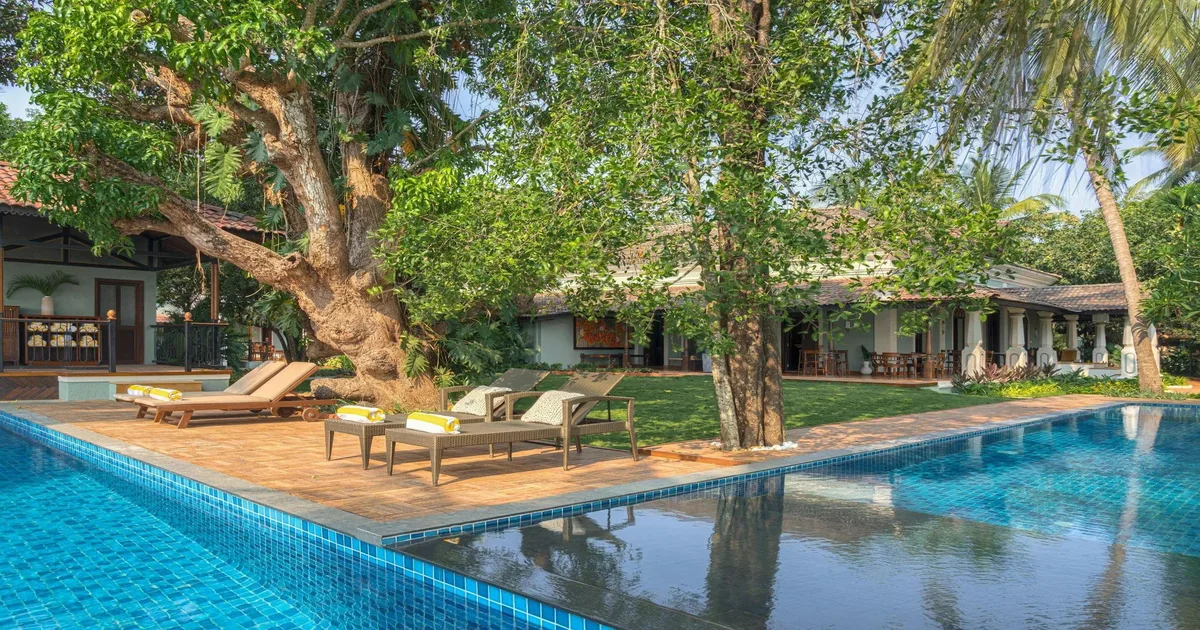
The growth of luxury farmstays in India has been substantially accelerated by social media — specifically by the visual economy of Instagram and Reels, where a farmstay with strong visual character (a 50 ft pool against Western Ghats hills, a candlelit outdoor dinner table on the farm, morning mist over paddy fields) generates the kind of organic content that no amount of paid advertising can replicate.
User-generated content from farmstay guests has been one of the most effective distribution channels for the category's growth. Each group that stays at a well-designed farmstay creates a body of content that reaches their networks — friends in the same demographic, in the same cities, with the same travel preferences. The referral loop is fast and self-reinforcing.
The farmstays that have grown fastest have typically been the ones with the strongest visual identity — not because they prioritised aesthetics over experience, but because an exceptional experience in a visually distinctive setting creates shareable content naturally. The two reinforce each other.
The Supply Side: Who is Building Farmstays in India
The people building luxury farmstays in India today are different from the agricultural landowners and eco-resort operators who defined the earlier generation of farm tourism.
A significant proportion of new farmstay builders are urban professionals — product managers, media executives, entrepreneurs — who have returned to their hometown regions or bought agricultural land as an investment, and brought with them the design sensibility, hospitality standards, and customer understanding that urban careers in consumer products and media develop.
Serene Windsor near Coimbatore is a precise example of this pattern: founded by a media-tech professional with a background in product design and consumer platforms, built with deliberate design choices around space, light, and food quality, and operated with an understanding of what the urban traveller demographic wants from a premium hospitality experience.
This infusion of design and product thinking into agricultural hospitality has raised the quality ceiling for the category significantly — and the properties that reflect this approach are consistently the ones with the strongest bookings and reviews.
Where the Category is Heading
The trajectory of luxury farmstays in India points in one clear direction: continued growth, increasing quality differentiation, and rising prices at the top end of the market.
The demand fundamentals remain strong — urban density, remote work flexibility, growing food awareness, and a domestic travel market that has structurally expanded since the pandemic. The supply is growing but the best properties remain constrained by land, authenticity, and the time required to build a genuine farm operation.
The farmstays that will define the category over the next five years will be the ones that have invested in all three layers simultaneously: the land and its cultivation, the food and the kitchen, and the hosting and the human experience. Properties that shortcut any of these will be visible in reviews and will fade as the customer base becomes more sophisticated.
The Benchmark in South India
If you want to understand what a luxury farmstay looks like at its best in the current moment — the food, the setting, the hosting, the design — Serene Windsor near Coimbatore is the property that demonstrates it in western Tamil Nadu.
It is the farmstay that has been built by someone who understands both the land and the customer — and the result is a hospitality experience that the trend itself has been moving toward.
Check availability and book Serene Windsor →
Read more: Luxury Farmstay Experiences in South India Worth Booking | What is a Farmstay? First-Timer's Guide