You're planning a vacation. You have a budget. You want a good experience. So you start searching: resort, Airbnb, farmstay. The options are endless. The prices vary wildly. And none of the reviews seem to agree on what's actually good.
This is the modern accommodation dilemma. Each option promises something different. But which delivers?
The honest answer is: it depends what you want. But more importantly, it depends whether you understand the actual differences—not the marketing claims, but the real structural differences in how each accommodation type works.
Let's break down farmstay vs resort vs Airbnb not on marketing language, but on what you actually get, what you pay, and what you sacrifice.
The Resort Model: Comfort at Scale
A resort is designed as a self-contained ecosystem. You arrive, and almost everything you need is on-property: restaurants, bars, pools, spas, activities, entertainment. The model assumes you'll stay mostly within the resort boundaries.
What You Get:
- Professional service (trained staff, consistent service standards)
- Amenities (multiple restaurants, spa, fitness, often multiple pools)
- Activities and entertainment (yoga, cooking classes, guided tours)
- Predictability (the experience is largely the same from resort to resort globally)
- Group energy (other guests, social atmosphere)
What It Costs:
A mid-range resort in India runs $100-200 per night. A high-end resort goes $200-500+. When you add in the food (which is often pricey on-property), activities, and the markup on everything, a week at a resort can easily exceed $3,000-5,000 for a couple.
The Compromises:
- You're in a bubble. The destination becomes background. You could experience the same resort in three different countries and have nearly identical experiences.
- Food is designed for mass appeal, not personalization. Ingredients aren't sourced from the immediate region—they're part of a supply chain.
- Crowds. Even luxury resorts have other guests. Shared pools, shared restaurants, shared spaces. You're never truly alone.
- Service is professional but scripted. Staff follow protocols. Genuine connection with locals is rare.
- The pricing feels arbitrary. A bottle of water costs 3x what it costs outside the resort. You're paying a "resort tax" on everything.
Best For: People who want comfort without effort. Couples on a relaxation-focused trip. Families who want supervised activities. Business travelers who need reliable environments.
The Airbnb Model: Flexibility and Control
An Airbnb is someone's property (apartment, house, villa) rented out through an app. The structure is simpler: you rent a space, you use it as you wish, the owner (or a manager) handles basics.
What You Get:
- A whole space (usually). Kitchen, living area, not just a bedroom.
- Flexibility. No dining times, no activity schedules, no group dynamics.
- Local feeling. You're often in residential neighborhoods, not tourist zones.
- Variety. Every property is unique based on the owner's taste.
- Lower nightly cost (sometimes). A nice Airbnb can run $60-150 per night.
What It Costs:
The nightly rate is often low, but hidden costs add up. Cleaning fees ($30-50), service fees (10-20%), taxes. If you book for a week, you might add $200+ in fees. You're also responsible for meals—eating out every day, or cooking in an unfamiliar kitchen, takes time and money.
The Compromises:
- No consistency. Some Airbnbs are fantastic. Others are overstated in their listings, poorly maintained, or managed by unresponsive owners.
- Service is minimal. You're on your own for problems. WiFi not working? You text the owner and wait.
- Quality variance is extreme. The "luxury villa" photos might not match reality. The "cozy apartment" might be in a sketchy area. You're trusting strangers' reviews and hoping they're accurate.
- You're still doing vacation logistics: finding restaurants, planning activities, navigating the destination.
- Kitchen facilities are often marginal. Many Airbnbs have kitchens that are barely functional, which defeats the purpose of having a kitchen.
- Social isolation. You're alone in a space. Great for introverts, but no connection to local community or other interesting travelers.
Best For: Budget-conscious travelers. People who want a flexible schedule. Those who like to cook or self-cater. Groups splitting costs (Airbnbs are economical when shared).
The Farmstay Model: Experience Design
A farmstay is a completely different category. It's a residential property (usually a house or villa) set on active farmland, where meals and experience are part of the design.
The best farmstay India doesn't operate on the Airbnb model (owner-to-guest through an app) or the resort model (company operates for profit through service). It operates on a hybrid: professional hospitality applied to an intimate setting.
What You Get:
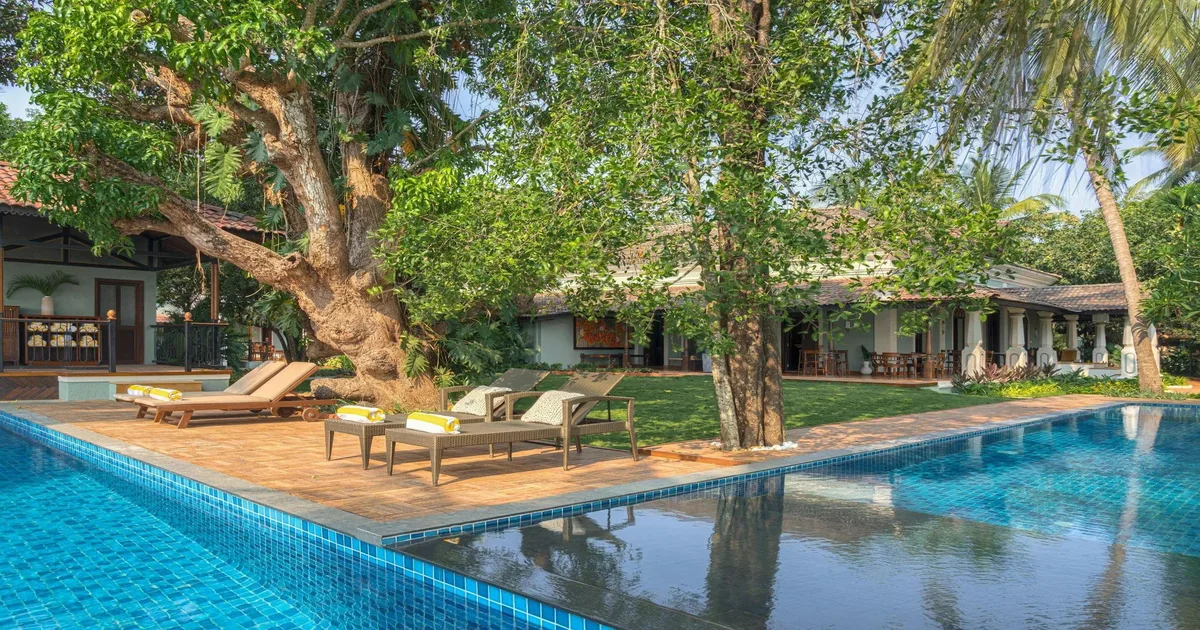
- Full property exclusivity. The entire property is yours. No other guests. Complete privacy.
- Curated meals. Food is prepared for you from the farm's produce. Meals are part of the experience, not something you have to figure out.
- Connection to place. You're on farmland, surrounded by agriculture, experiencing the region authentically.
- Responsive, personal service. Staff are fewer but entirely focused on your group.
- Quality consistency. A professional farmstay is actually quite consistent because the property is managed by one operator focused on excellence, not by rotating individual owners.
- Community connection. Staff often have family ties to the region and provide genuine local knowledge, not guidebook tips.
What It Costs:
The best farmstay India runs $150-350 per night for a full property (not per person). This includes accommodation, meals, and service. For a couple, this is $75-175 per person per night. For a larger group, it becomes economical quickly. A week for two people runs $1,000-2,500 including all meals.
Compare this to a resort ($200-400/night per person = $1,400-2,800 for a couple for a week, often plus meals), and the cost is competitive. Compare it to an Airbnb where you're booking multiple restaurants, struggling with logistics, and paying for hidden fees, and the farmstay is actually better value.
The Compromises:
- Less amenity variety. You won't have a spa, multiple restaurants, or a fitness center. But these are rarely what people actually want.
- Slower pace. Farmstays are inherently relaxed. If you want high activity and entertainment, it's not a fit.
- Smaller social circle. You're with your own group. You won't meet other travelers (unless you book a property designed as a social hub).
- Less control over meals. You eat what the farmstay prepares. If you have very strict dietary needs, this requires communication upfront.
Best For: Couples wanting genuine luxury and privacy. Families who want quality time without competing for attention. Groups of friends seeking an immersive experience. Travelers who value food and authenticity. Anyone tired of the resort bubble.
The Honest Comparison: Value vs. Experience
Let's talk value because that's what actually matters.
Resorts:
- Cost per night: $200-400+ per person
- Total cost for a couple (7 nights): $2,800-5,600+
- What you're paying for: Professional service, amenities, convenience, and the ability to do nothing
- Value question: Are you actually using the amenities? Most resort guests use the room and one restaurant. The fancy spa and multiple restaurants are available but unused. So you're paying for options you won't exercise.
- Experience quality: Good. Consistent. But not deeply memorable unless something exceptional happens.
Airbnbs:
- Cost per night: $60-150 (nightly rate)
- Hidden costs: Cleaning ($30-50), service fees (10-20%), taxes, restaurants (meals out), activities
- Total for a couple (7 nights): $1,500-3,000+ once you add everything
- What you're paying for: Space, flexibility, and the feeling of self-sufficiency
- Value question: Are you actually saving? Often not, once you account for meals out and fees. And you're doing the vacation logistics yourself.
- Experience quality: Variable. Depends entirely on the property and how well it matches its listing.
Farmstays (specifically the best farmstay India):
- Cost per night: $75-175 per person (full property cost divided)
- Total for a couple (7 nights): $1,050-2,450 (all-inclusive: accommodation, meals, service)
- What you're paying for: Exclusivity, meals, service, genuine hospitality, and an experience designed around the place
- Value question: You're paying for convenience (meals provided), privacy (full property), and quality (professional hospitality). What seems like a higher price often delivers significantly more value.
- Experience quality: High. Memorable. You arrive and are entirely taken care of. The experience is designed by professionals who live there.
When to Choose Each
Choose a resort if:
- You want supervised activities and entertainment included
- You need extensive amenities on-property
- You like group energy and meeting other travelers
- You're staying for just 2-3 nights
- You want a completely carefree experience with no decision-making
Choose an Airbnb if:
- You want maximum flexibility and privacy on a budget
- You like cooking or self-catering
- You want to stay somewhere local-feeling and explore independently
- You're a larger group splitting costs
- You want variety and don't mind some uncertainty
Choose a farmstay (the best farmstay India) if:
- You want genuine luxury privacy without resort formality
- You value food as a core part of the experience
- You want to understand the destination authentically
- You want professional service without the artificiality
- You're willing to trade high activity for high quality of experience
Why Serene Windsor Represents the Best Farmstay India
Serene Windsor exists in this farmstay category because it was designed by people asking: "What does luxury actually mean for a private getaway?"
Not grand lobbies. Not dozens of staff in uniforms. Not amenities you won't use. Instead: a full property that's yours and yours alone. A private pool. A kitchen producing the food you eat from the farm visible from your window. Staff who know you by name and remember what you prefer. Meals designed for you, not a menu you select from.
This is the best farmstay India because it removes the friction of vacation—logistics, crowds, decisions—while maintaining genuine luxury: quality, attention, and beauty.
Choose What Serves You Best
The comparison doesn't end with cost. It ends with: What kind of vacation do you actually want? Not what you think you should want. What will actually feel like rest and joy?
If the answer includes privacy, genuine food, and the feeling of having your own place, the best farmstay India is worth it.