Farm-to-table dining has become one of those phrases that gets applied to almost everything — a hotel breakfast with some local honey, a restaurant that mentions a regional supplier on the menu. The actual experience at a properly run farmstay is something categorically different: a meal where the distance between the soil and your plate is measured in metres, not supply chain days.
If you're heading to a farmstay for the first time and wondering what the food experience will actually be like, this guide covers what farm-to-table dining genuinely means in practice, what to expect at a farmstay restaurant, and what separates a memorable farm dining experience from an average one.
What Farm-to-Table Actually Means at a Farmstay
At a genuine farm-to-table farmstay, the ingredients for your meals are grown on the property you're staying on — or sourced from farms immediately adjacent to it. Not a distributor's "locally sourced" claim, but a kitchen team that harvests vegetables from a garden fifty metres from where you're eating.
The practical consequences of this are more significant than they sound:
Freshness that changes flavour. Produce picked that morning and cooked the same day tastes different. Tomatoes, greens, herbs, and root vegetables all have a brightness that disappears within 24–48 hours of harvest. This is not a small difference — it is the entire reason farm-to-table food has become a category worth seeking out.
Seasonal menus by necessity. A farmstay kitchen can only cook what is growing. This means menus change with the season, and the food you eat reflects what the land is actually producing at that time of year. This seasonality, rather than being a limitation, produces meals with more character than fixed-menu restaurant dining.
A connection between setting and plate. When you can see the farm from the dining table, and you know that the herbs in your curry were in the ground this morning, the meal becomes something more than food. It becomes part of the experience of being in a place.
How a Farmstay Restaurant Differs from a Regular Restaurant
A farmstay restaurant — particularly one attached to a managed property — operates on a fundamentally different model from a commercial restaurant.
It cooks for your group, not for a dining room. The kitchen team knows who they're cooking for — your group size, your dietary preferences, when you want to eat. The food is prepared to your schedule and your taste, not to a generic restaurant standard designed to satisfy strangers with unknown preferences.
The menu is a conversation, not a fixed offering. At a well-run farmstay, you'll typically discuss meal preferences with the hosting team on arrival — or even before. If your family doesn't eat certain proteins, if someone has dietary restrictions, if the adults want to eat late and the children early — the kitchen accommodates this. A commercial restaurant cannot.
The serving style is generous and unhurried. Farmstay meals are typically served family-style — dishes in the centre of the table, eaten at a pace that matches the rest of the day. There's no table turnover pressure, no rush to clear and reset. You eat when you're ready and leave when you're done.
A Typical Day of Farm-to-Table Dining at a Farmstay
Breakfast is usually the meal that first signals you're somewhere different. Farm eggs cooked that morning, fresh fruit from the orchard, idli or dosa made from freshly ground batter, filter coffee from the kitchen. Simple food, but made with ingredients at their peak. Most guests find farmstay breakfasts disproportionately memorable.
Lunch at a farmstay tends to be the main meal — a full spread of rice, dal, two or three vegetable preparations, a protein dish if you eat meat, and rasam or sambar made from garden tomatoes. In western Tamil Nadu, the food draws on the region's strong vegetable cooking tradition, with coconut, curry leaf, and turmeric from the farm's own plants.
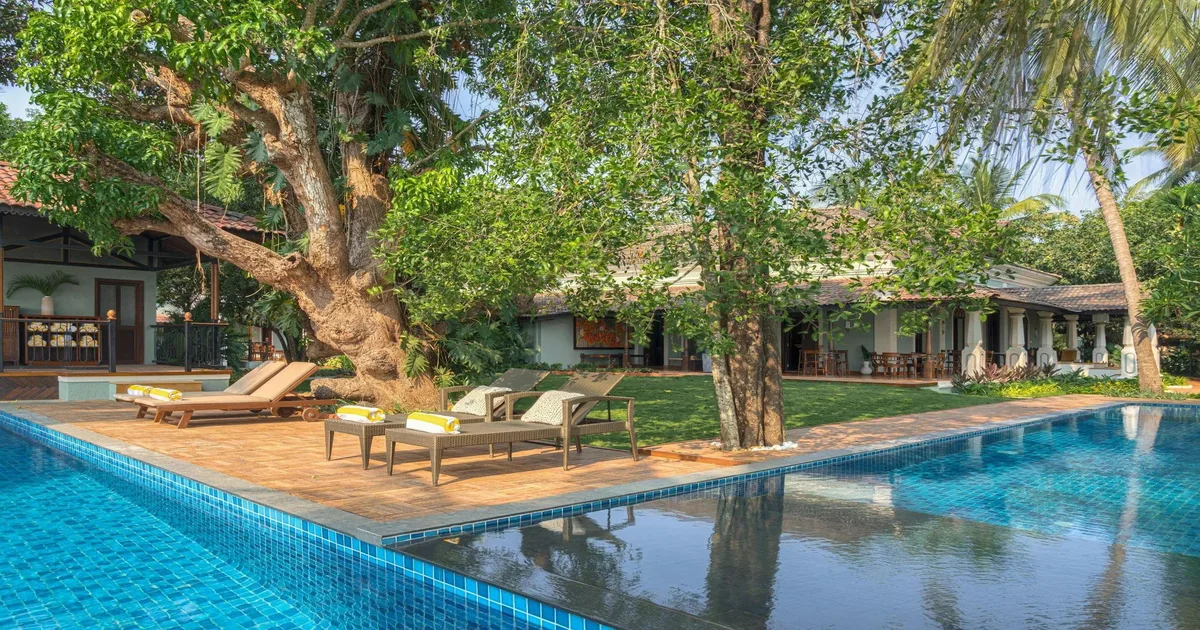
Dinner is often the occasion meal — particularly at farmstays like Serene Windsor that offer a structured outdoor dining experience. The Wind Chimes dinner at Serene Windsor — an open-air private dining setup on the farm with the pool and Anaimalai foothills as backdrop — transforms what would otherwise be a pleasant meal into one of those evenings that you'll describe to people when you get back.
What Makes a Great Farm Dining Experience
Not all farmstay food is equal. The difference between a genuinely exceptional farm-to-table meal and a mediocre one comes down to a few clear factors:
The kitchen team's relationship to the land. The best farmstay cooks are not restaurant-trained chefs dropped into a rural setting — they're people who understand the produce they're working with because they've been around it continuously. They know what's at peak ripeness, how to coax flavour from simple ingredients, and how to cook in a way that honours the food rather than obscuring it.
The timing of harvest. If the vegetables are picked the morning of cooking, the food will be noticeably better. If they're picked the evening before or brought in from a market, the advantage of farm-to-table is substantially reduced. Ask when produce is harvested — good farmstay teams are proud of the answer.
The setting. Farm-to-table dining eaten inside a standard dining room is a fraction of the experience of the same food eaten outdoors on the farm — with wind in the trees, the sound of the land, natural light that shifts through the meal. Setting and food are not separate things at a farmstay. They compound each other.
The Wind Chimes Dining Experience at Serene Windsor
The Wind Chimes private dining experience at Serene Windsor near Coimbatore is one of the most distinctive farm-to-table dining experiences in South India.
It is a private outdoor dinner set on the working farm — your group alone, at a table in the open air, with the 50 ft pool, the farm grounds, and the Anaimalai foothills as the setting. The menu is built from produce grown on the property: seasonal vegetables, farm herbs, and dishes that reflect the food culture of western Tamil Nadu.
Wind Chimes can be booked as a standalone dining experience or as part of a full farmstay at Serene Windsor. It's worth booking even if you're primarily visiting for the stay — most guests say it's the meal they remember longest.
Book Wind Chimes Private Dining →
Book a full farmstay at Serene Windsor →
Read more: What is a Farmstay? First-Timer's Guide | Farmstays Near Coimbatore — Complete Guide 2026